The Brewpub as a Neighborhood Anchor
In many neighbourhoods, a brewpub becomes part of how people describe the area. It is used as a reference point when giving directions, suggested casually as a place to meet, or folded into daily routines without much ceremony. Over time, its presence stops feeling new and starts feeling necessary, even if no one says so directly.
This anchoring role is not created through size or marketing. It develops through repetition and familiarity. A brewpub that opens when it says it will, looks the same week to week, and remains visibly connected to the street slowly earns a sense of permanence. That stability gives it weight within the local environment.

Physical Presence and Location
Neighborhood brewpubs often take over spaces that already have a history, such as former shops, warehouses, or corner units. Their ground-level placement and visible interiors connect them directly to street life. Brewing tanks, open doors, and outdoor seating act as signals that the space is meant to be entered, not observed from a distance.
When a brewpub matches the scale and character of nearby buildings, it feels settled rather than imposed. This physical alignment helps it blend into the area instead of standing apart as something imported or temporary.
Consistency Over Novelty
For local communities, reliability matters more than constant change. Regular opening hours, familiar staff, and a stable selection of core beers create trust. People return not because they expect surprise, but because they know what they will find.
Small variations still play a role. Seasonal beers or minor menu updates add interest without disrupting routine. This balance allows a brewpub to evolve gently while staying anchored in everyday expectations.
Shared Daily Rhythms
Brewpubs often align with recurring patterns such as after-work stops, weekend afternoons, or early evening meals. These repeated moments form informal schedules shared by people who may never plan to meet each other.
Over time, recognition replaces introduction. Familiar faces appear again and again, and presence becomes a form of quiet acknowledgment. Social connection develops through repetition rather than deliberate effort.
Regular Patrons and Informal Membership
A neighborhood pub's distinctive characteristic is its regulars. Their actions shape and guide the movement of the room, the noise level, and the general feel of interaction. Often, a newcomer feels this, even if he can't name it.
This sense of belonging is soft. No card, sign-up sheet, or even requirement of contribution would sway one into membership. Being a member comes with no obligations.
Recognition Without Obligation
Feeling known does not require active engagement. A nod from the bartender, a remembered order, or a brief greeting can be enough to signal inclusion. These small gestures allow people to feel recognized without being drawn into conversation.
This low-pressure familiarity makes the space accessible. People can arrive alone, stay briefly, or leave without explanation while still feeling part of something ongoing.
Social Mixing Across Backgrounds
Neighborhood brewpubs tend to attract a wide mix of ages, professions, and lifestyles. Beer provides a shared reference point without defining identity or status. No one needs to explain why they are there.
This mix supports casual interaction rather than structured networking. Conversations stay grounded in the moment, shaped by shared space rather than personal background.
Unspoken Community Norms
Over time, regulars establish informal expectations around behavior. These might include acceptable noise levels, how long people linger, or how shared tables are used. Such norms are learned by observing others rather than being told directly.
This quiet social learning gives the space a lived-in quality. The brewpub feels guided by habit and mutual awareness rather than formal rules.
Events as Community Touchpoints

While daily routines form the foundation of local beer communities, events provide moments of focus. They create shared experiences that briefly interrupt routine while remaining familiar.
These gatherings tend to be modest in scale. Their value lies in repetition and continuity, not in spectacle or one-time impact.
Low-Barrier Gatherings
Events like trivia nights, tastings, or small performances invite participation without preparation. People can decide to join on the spot, whether alone or with friends.
Because the barrier to entry is low, these events feel inclusive. They extend normal operating hours rather than replacing them with something formal or exclusive.
Seasonal and Local Themes
Many brewpub events reflect local seasons or neighborhood milestones. This might include harvest-related beers, holiday gatherings, or anniversaries tied to the area.
By aligning with local rhythms, events feel relevant rather than generic. They reinforce the sense that the brewpub responds to its surroundings instead of following a fixed template.
Staff as Hosts, Not Performers
The staff in community-focused settings usually have more of a facilitator role than that of entertainer. They support interactions and keep things going without being center to the stage.
This strategy therefore allows for an informal feel anywhere. What remains in focus is shared presence and convo rather than performance.
Collaboration Within the Local Ecosystem
Local beer communities are pretty much always interwoven into the social fabric of a district: indeed, a brewpub could just as well be an avenue for linking up with adjacent businesses and creatives.
Such relationships extend the brewpub's relevance beyond the four walls and anchor the micro-brewery firmly into the local economy.
Food and Ingredient Partnerships
Collaborating with local producers connects brewpubs to existing supply chains. Ingredients, menu items, or special releases may highlight nearby farms or suppliers.
This visibility reinforces the idea that the brewpub participates in local circulation. It becomes part of how resources move through the neighborhood.
Creative and Cultural Projects
Some brewpubs host exhibitions, readings, or small performances in collaboration with local artists. These projects blur the line between hospitality and cultural space.
By offering a platform rather than acting as a formal venue, brewpubs support creative activity without imposing structure or hierarchy.
Cross-Neighborhood Identity
What we see is how brewpub collaborations, spread between proximity, encourage tasting of their beer outside of the immediate vicinity. Tagging from a mutual leaflet or sharing a joint event acquaints two different communities and still maintains local character. Such links contribute to building regional potentials without dispersing the neighborhood identity.
Informal Gathering and Social Function
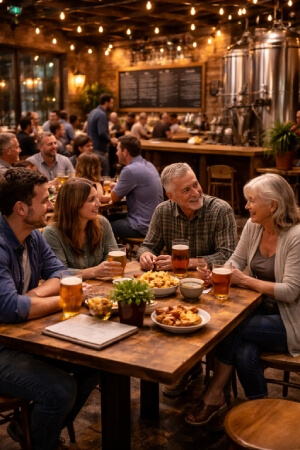
The social role of a brewpub often extends beyond drinking. Positioned between private homes and formal venues, it provides a rare kind of casual public space.
As informal gathering places become less common, this function has grown more significant.
A Third Place Without Formality
Brewpubs often act as third places, separate from home and work. People can arrive alone, meet others by chance, or simply sit quietly.
There is no requirement to participate. The space accommodates different moods and intentions without judgment.
Conversation Over Consumption
Beer remains central, but it does not dominate. Many patrons come for conversation, atmosphere, or a pause in their day rather than for drinking itself.
The slower pace encourages longer stays and deeper interaction, supporting connection over time.
Intergenerational Presence
Neighborhood brewpubs often draw a wide age range. This mix contributes to balance and continuity, bringing different perspectives into shared space.
Seeing familiar faces across generations strengthens a sense of collective ownership.
Neighborhood Identity and Local Pride
With the passage of time, the brewpub invariably becomes a quiet symbol of the neighborhood. It helps define the neighborhood in the eyes of those who live there, not through any form of slogan or branding, but through just being there.
Names, Styles, and References
Beer names, interior details, and visual choices often draw from nearby streets, local landmarks, or small historical references. These elements signal that the brewpub is paying attention to its surroundings rather than applying a generic theme. When done thoughtfully, such references feel familiar instead of decorative. Regular patrons recognize the nods and understand their meaning without explanation. This quiet acknowledgment strengthens attachment because it reflects lived experience. The space feels specific rather than interchangeable. Care is important here, as subtlety matters more than volume when reinforcing a sense of shared local identity.
Stability During Change
In neighborhoods undergoing rapid development or demographic shifts, brewpubs can offer a sense of continuity. Their consistent presence provides a familiar setting even as nearby businesses close, reopen, or change purpose. This stability helps preserve social links that might otherwise weaken during periods of transition. People return to a place that still feels known, even if the surroundings look different. By remaining attentive and steady, brewpubs can support community cohesion without resisting change outright. Their role is not to stop transformation, but to offer reassurance through reliability and shared routine.
Challenges and Responsibilities of Community-Centered Brewing
Being situated in a neighborhood involves being responsible. Brewpubs must balance their advancement and being careful of their surroundings. Local acceptance will not be a guarantee by such one-time gestures; instead, it should be cherished at all times.
Managing Growth Carefully
As popularity increases, crowding or expansion can strain relationships. Changes in atmosphere may affect regulars who value familiarity.
Careful choices help preserve long-term trust and maintain alignment with local expectations.
Noise, Space, and Coexistence
Operating near residences requires attention to noise and shared spaces. Clear communication with neighbors supports coexistence.
Respectful integration strengthens goodwill and prevents friction.
Staying Grounded Over Time
Community connection must be renewed daily. It relies on consistent behavior and responsiveness to feedback.
Remaining attentive helps prevent drift away from local needs.
What Neighborhood Beer Communities Sustain
Local beer communities frame the social life of people. Though more built up through everyday doings than some ostentatious act, they often allow people to come together carefree and with a certain ease. The community alcohol shack is a platform where people can belong without being formally organized. This practice is based on obscure memories-the incentive which can take form only in reactions, rather than on legal foundation.