Why Food Matters in the Brewpub Experience
Breweries are not just places that serve beer on tap there. They are set up as social places where people stay, eat, and enjoy the taste of beer, and eat food, providing some structure in the consumption of their beer; providing guests a chance to 'engage' with their beer in any form.
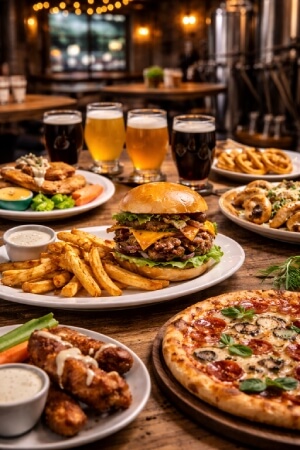
The Brewpub as a Dining Space
In comparison to the brewhouses that strategically center their operations on a beer service model, full-fledged dining settings characterize the operation of brewpubs. Seating arrangements, table service, and pacing within the menu will relate to the presumption that individuals may be eating to complement the beverages they consume. This is where thought about how the beer is made and presented meets the road.
Guests often sit at the table for longer, thus diners generally want food-friendly beers which they can easily be savored with food. Some beers, with very high alcohol, high IBU may put forward some balanced styles more approachable to a broader range of accompanying dishes.
Food as a Guide for Beer Exploration
For many visitors, food acts as a bridge into unfamiliar beer styles. A dish paired with a specific beer provides context and reassurance, making it easier to try something new. This reduces uncertainty and encourages exploration without requiring deep beer knowledge.
Menus that suggest pairings help guests understand why a beer tastes the way it does. Over time, these experiences build intuitive awareness of how flavors interact, even for casual drinkers.
Supporting Responsible Consumption
Food also plays an important role in pacing and moderation. Eating while drinking helps slow alcohol absorption and encourages more mindful consumption. From an operational perspective, this supports guest safety and long-term enjoyment.
Many brewpubs view food not just as a revenue stream, but as part of their responsibility to create balanced experiences that prioritize comfort and well-being alongside flavor.
Core Principles of Beer and Food Pairing
Some basic guiding principles guide beer-and-food pairing: These are understanding the harmony of flavors typically brought together by meals and beverages, rather than trying to copy or complement; also remembering to enjoy, share, and experiment every day.
Balance Between Intensity Levels
One of the most important considerations is matching intensity. Light, delicate beers tend to work best with subtle dishes, while rich or bold beers can stand up to heavier foods. When one element overwhelms the other, nuance is lost.
For example, a low-alcohol wheat beer may be overshadowed by a heavily spiced or fatty dish. Conversely, a strong, dark beer can feel harsh or overpowering next to a simple salad. Balanced intensity keeps both beer and food expressive.
Complementary Flavors
Complementary pairing focuses on shared or similar flavor characteristics. Malty sweetness may echo caramelized ingredients, while roasted notes can align with grilled or baked foods. These pairings feel cohesive and familiar.
This approach is often used to create comfort-oriented menus, where beer and food feel naturally connected rather than experimental. It is especially effective for introducing guests to pairing concepts without challenging expectations.
Contrasting Flavors
Contrast creates interest by placing opposing flavors side by side. Bitterness can cut through richness, carbonation can cleanse the palate, and acidity can brighten heavier dishes. These interactions keep the experience dynamic.
Many classic brewpub pairings rely on contrast, using beer to refresh the palate between bites. This makes rich foods easier to enjoy over the course of a full meal.
Considering Texture and Mouthfeel
Flavor is only part of the equation. Texture, carbonation, and body also influence how beer and food interact. A creamy dish may pair well with a crisp, effervescent beer that resets the palate.
Similarly, a full-bodied beer can mirror the weight of a hearty dish, creating a sense of continuity. These tactile elements are often subtle but play a significant role in overall satisfaction.
Practical Pairing Guidelines Used by Brewpubs
The development of menus at several brewpubs relies on loosely set guidelines usually written in-house solely for reference in aligning kitchen and brewery goals.
- Match food and beer intensity so that neither overpowers the other
- Use bitterness and carbonation to counterbalance richness
- Match roasted or caramelized foods with malt-forward beers
- Feature light beers to cleanse the palate between courses
- Enhance spices to support flavors instead of clashing with the beer flavors
These instructions get revised constantly especially when the food and beer offerings change.
How Beer Styles Influence Menu Design
Beer styles provide a framework for designing menus at brewpubs, each style introducing actual terms of characteristics that a chef may work (luckily) within planning the construction of a menu. Over time, these patterns forge the food identity of the brewery's brewpub. Instead of matching single beers to singular dishes, many brewpubs will develop their menu around much broader alcoholic products within their space.
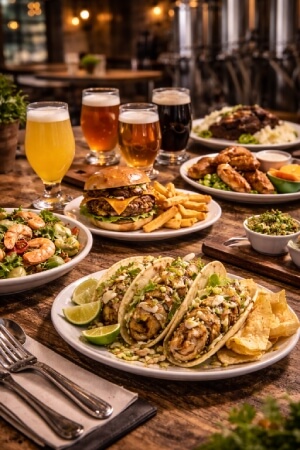
Light and Crisp Beer Styles
Beers that emphasize freshness, carbonation, and mild flavors often pair well with lighter foods. Salads, seafood, and simple grain-based dishes benefit from beers that do not overwhelm their natural flavors.
Menus built around these beers tend to focus on balance and restraint. Clean preparation and fresh ingredients allow the beer to play a supporting role without competing for attention.
Hoppy and Bitter Beers
Hop-forward beers introduce bitterness and aromatic complexity. These qualities can interact strongly with food, especially spicy or fatty dishes. Bitterness helps cleanse the palate, while hop aromas add another layer of sensory interest.
Because hops can clash with certain flavors, menus often include foods designed to soften or absorb bitterness. Rich sauces, fried textures, and bold seasonings are common companions.
Malt-Driven and Dark Beers
Beers with pronounced malt character often feature notes of bread, caramel, chocolate, or roast. These flavors naturally align with roasted, baked, or slow-cooked foods.
Brewpub menus that highlight these beers may include hearty dishes meant to be enjoyed slowly. The shared warmth and depth between beer and food create a sense of cohesion and comfort.
Seasonal and Specialty Beers
Limited or seasonal beers allow brewpubs to experiment with temporary menu items. These beers often inspire short-term dishes designed to highlight specific ingredients or brewing techniques.
This approach keeps the menu dynamic while reinforcing the connection between the kitchen and the brewhouse. Guests are encouraged to return to experience new combinations as both beer and food evolve.
Menu Structure and Pairing Strategy
How a menu is organized influences how guests approach pairing. Brewpubs use different structures to guide choice without overwhelming diners with technical detail.
Pairing Suggestions Without Pressure
Some brewpubs include subtle pairing notes rather than explicit instructions. These suggestions act as guidance, not rules, allowing guests to explore at their own pace.
This approach respects personal preference while still offering educational value. Guests can follow the suggestion or choose differently based on mood or familiarity.
Shared Dishes and Group Pairing
Brewpubs often emphasize shareable plates. This encourages groups to sample multiple beers and dishes, naturally creating pairing opportunities across the table.
Shared dining supports conversation and comparison, making the pairing experience social rather than instructional. It also reflects the communal roots of brewpub culture.
Course Progression and Beer Flow
Menus are frequently designed with progression in mind. Lighter dishes and beers may appear earlier, with richer options later. This mirrors traditional meal structure and supports palate development over time.
Thoughtful sequencing helps guests avoid fatigue and enjoy each pairing on its own terms.
Food Beyond Pairing: Its Broader Role
While pairing is important, food in brewpubs serves purposes beyond flavor interaction. It shapes atmosphere, supports community, and reinforces the identity of the space.
Creating a Welcoming Environment
Food makes brewpubs approachable for a wider audience. Not everyone visits primarily for beer, and a strong food offering invites families, non-drinkers, and mixed groups.
This inclusivity strengthens the brewpub’s place within its local community and broadens its appeal beyond beer enthusiasts.
Encouraging Longer Visits
A well-designed menu encourages guests to stay longer and engage more deeply. Meals naturally extend visits, allowing time to explore multiple beers rather than rushing through a single drink.
Longer stays support conversation, relaxation, and repeat orders without encouraging excess.
Reflecting Local Identity
Many brewpubs use food to express regional character. Local ingredients, familiar dishes, and cultural references ground the beer in a specific place.
This sense of identity makes the pairing experience more meaningful, connecting beer to local traditions and tastes.
Common Pairing Pitfalls and How Brewpubs Avoid Them
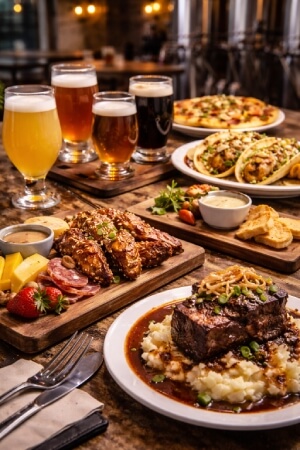
Not every pairing is productive. Experience teaches brewpubs which ones enhance the experience and which ones grind it to a halt. Illusions very much join the menus in a sophisticated way.
Beware of the evils, lest they be detrimental down the road and hurt your service levels and reputation.
Overpowering the Beer
Dishes with extreme heat, sweetness, or acidity can mask beer flavors entirely. Brewpubs often adjust seasoning levels or offer alternative sauces to prevent this imbalance.
The goal is not to neutralize food, but to keep both elements expressive.
Ignoring Alcohol Content
High-alcohol beers require careful pairing. Heavy dishes can amplify alcohol warmth, while light foods may leave the beer feeling harsh.
Menus often flag stronger beers or pair them with richer foods that absorb and soften their impact.
Too Much Complexity at Once
Combining highly complex beers with intricate dishes can overwhelm the palate. Brewpubs often simplify one element to let the other shine.
This restraint allows guests to appreciate detail rather than feel fatigued by competing sensations.
How Guests Experience Pairing in Practice
From the guest’s perspective, pairing is often intuitive rather than analytical. People respond to how combinations make them feel, not to technical explanations.
Brewpubs succeed when they translate brewing and culinary knowledge into enjoyable, low-pressure experiences.
Learning Through Repetition
Regular visits help guests develop pairing instincts. Familiar dishes tasted alongside different beers reveal how flavors shift depending on the match.
This learning happens naturally, without formal instruction, through repeated exposure.
Personal Preference Over Rules
While pairing principles offer guidance, individual taste always comes first. Brewpubs that encourage experimentation acknowledge that enjoyment is subjective.
This flexibility keeps the experience welcoming rather than prescriptive.
More Than a Meal, More Than a Beer
The art of beer and food pairing in brewpubs functions more as a facilitated and engaging experience rather than following complex technical formulas or strict guidelines. The heart of the matter is to bring about an ethical page-turning effect, soothing one's thirst, and keeping worthy companions in all the glory of festivity and conviviality.